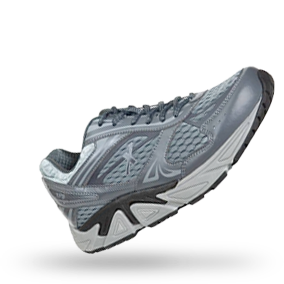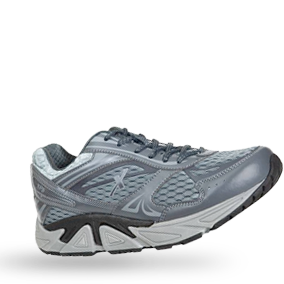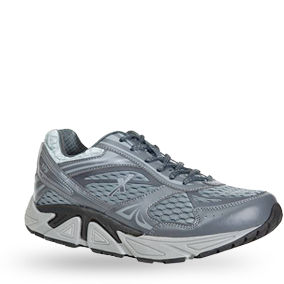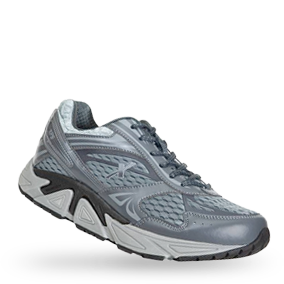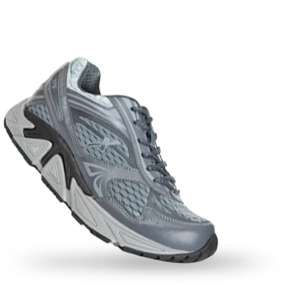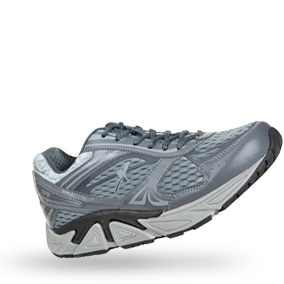
A supportive shoe should make walking feel less like work. If your feet roll inward, your ankles feel unsteady, or discomfort travels from your feet into your knees, hips, or lower back, the right level of support can help. The choice between motion control versus stability shoes often comes down to one question: how much guidance does your stride actually need?
Both types are designed to support a more controlled gait, especially for people who overpronate. But they are not interchangeable. A stability shoe provides supportive guidance for many active walkers and runners. A motion-control shoe is built for people who need a firmer, more structured platform to limit excessive foot motion.
Pronation is the natural inward movement of the foot after it lands. It helps the body absorb impact and adapt to the ground. The concern is not pronation itself, but excessive or poorly controlled pronation that can place added stress on the foot, ankle, knee, hip, and lower back.
Stability shoes are intended to gently guide the foot through this part of the gait cycle. They commonly use a firmer section of midsole foam, a supportive sidewall, a wider base, or a structured heel counter to help keep the foot from rolling too far inward. The goal is balanced support without making the shoe feel overly rigid.
Motion-control shoes take that support further. They are generally built with a more substantial platform, firmer guidance features, and increased structure through the heel and midfoot. They are designed to resist excessive motion more assertively and promote steadier alignment from heel strike through toe-off.
Think of stability as guided support and motion control as maximum support. Neither is automatically better. The right choice depends on your gait, your body, your activity, and how your current footwear affects the way you feel after a day on your feet.
A stability shoe can be a strong choice for people with mild to moderate overpronation who still want a responsive, comfortable ride. Many walkers, runners, and fitness-focused consumers prefer stability footwear because it adds support without feeling especially restrictive.
You may be a good candidate for a stability shoe if your shoes show moderate inward wear along the heel or forefoot, you notice occasional ankle fatigue, or your knees tend to drift inward when you walk or run. Stability shoes can also make sense for someone who has started experiencing discomfort after increasing walking mileage, returning to exercise, or spending longer hours standing.
The level of cushioning matters, too. A stability shoe can be highly cushioned, moderately firm, or more performance-oriented depending on its design. That means a person seeking support for daily walks may need a different stability shoe than someone training for a 5K. Support should fit the activity, not just the label on the shoe box.
Motion-control shoes are often best for people who need more than a small amount of guidance. If your foot visibly collapses inward during walking, you have a broad or flat-footed stance that feels unstable, or you repeatedly wear down the inside edge of your footwear, a motion-control design may provide the firmer foundation you need.
They can be especially valuable for people whose excessive inward motion contributes to recurring fatigue or discomfort in the feet, ankles, knees, hips, or lower back. People carrying more body weight may also appreciate the wider, more stable base that is common in motion-control footwear. The added structure can help create a more dependable platform during long walks, errands, work shifts, and everyday movement.
That said, more control is not always more comfortable. A shoe that feels too firm or too corrective for your natural gait can feel awkward, particularly if you have a neutral stride or only mild pronation. The shoe should guide your foot, not make you feel as though you are fighting it with every step.
It is common to assume that low arches always require motion control and high arches always require neutral shoes. Real gait patterns are more complicated. A person with low arches may walk comfortably in a stability shoe, while someone with average-looking arches may need more motion control because of ankle mobility, leg alignment, old injuries, or how their foot moves under load.
Rather than choosing by arch height alone, pay attention to how you move and how your body responds. A qualified footwear professional can observe your gait and help identify whether you need moderate support, maximum control, more cushioning, or a combination of these features.
The words “stability” and “motion control” are useful starting points, but shoe construction varies widely. Two shoes with the same category label can feel very different on your feet. Look at the whole platform rather than relying on a single feature.
A supportive heel counter helps secure the rear of the foot and can reduce unwanted side-to-side movement. A broad base under the heel and midfoot creates a more stable landing surface. Structured midsole geometry, firmer foam in strategic areas, and supportive sidewalls can help guide the foot without relying on an old-style hard post alone.
Cushioning should also be part of the decision. Support helps manage alignment, while cushioning helps reduce the impact your body experiences with each step. If you walk on hard sidewalks, stand at work, or have sensitive joints, seek a shoe that combines a stable platform with shock absorption. A supportive shoe that feels harsh after thirty minutes is not the right solution.
Fit is equally important. Your heel should feel secure, your midfoot should feel supported rather than squeezed, and your toes should have enough room to spread naturally. Try shoes later in the day when feet are often slightly larger, and wear the socks or orthotics you normally use. If you use a custom orthotic, make sure the shoe has enough depth and a removable insole when needed.
Start with the activity that places the greatest demand on your feet. For casual walking and daily errands, comfort, cushioning, and all-day stability may matter more than a lightweight feel. For running, you may want support that feels controlled but still allows a natural, efficient transition forward. For hiking, prioritize a stable base and secure fit that can handle uneven terrain.
Then consider your current shoes. If you consistently feel better in firm, structured footwear and less comfortable in soft, flexible shoes, motion control may be worth trying. If you want noticeable support but still prefer a somewhat more adaptable ride, stability footwear may be the better match.
Pain patterns offer useful information, but they do not diagnose the cause. New, sharp, persistent, or worsening pain deserves attention from a healthcare professional. Supportive shoes can be an important part of pain prevention and daily comfort, but they work best alongside appropriate care for injuries, medical conditions, or significant changes in mobility.
Xelero footwear is designed around this practical need for controlled motion, alignment support, shock absorption, and forward movement. The aim is not to force every foot into the same solution. It is to give people who need dependable structure a better foundation for walking, recovery, and staying active.
When moving into a stability or motion-control shoe, wear it for shorter periods at first. A different level of structure can change how your feet, calves, and legs work together. Gradually increase wear time over several days, especially if you are replacing a very soft or worn-out shoe.
Pay attention to more than first-step comfort. The better test is how your feet and joints feel after a walk, at the end of the day, and the following morning. A shoe that supports your gait well should leave you feeling more stable and less fatigued, not pressured in one spot or sore in a new area.
The best supportive shoe is the one that gives your stride a steadier foundation while still feeling natural. Choose the level of control that helps you move with confidence, so the miles, errands, and everyday moments ahead feel more manageable.